Home Science Tools: Real Lab Equipment For Kitchen Table Scientists
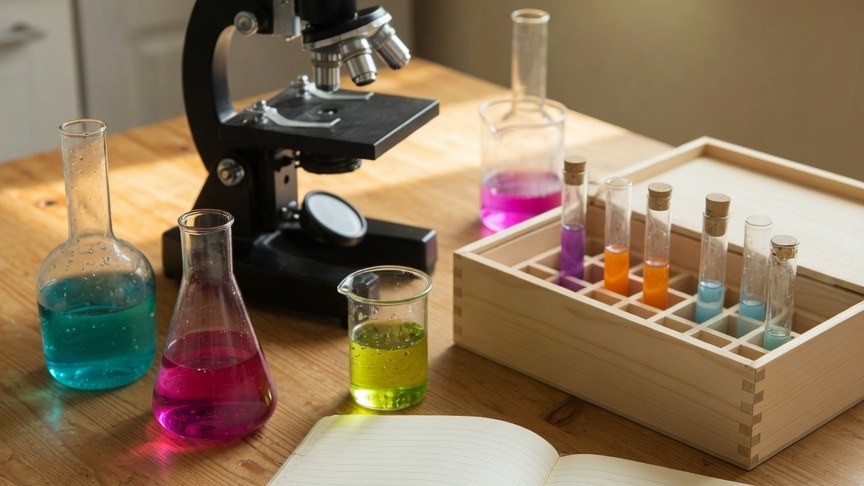
The toy aisle's idea of a science kit is a box that does one colorful trick and then gathers dust. Home Science Tools sits at the other end of the spectrum: a specialist store that has been outfitting homeschool families and classrooms since 1994 with the same kind of equipment real labs use, microscopes with mechanical stages, actual glassware, chemicals with proper labels, and dissection specimens, sized and priced for a family.
The short version
If you want home experiments that produce real observations instead of prepackaged effects, this is the store built for exactly that. Kits start around $13, serious compound microscopes run into the low hundreds, and curriculum bundles line up with the major homeschool programs. They are an approved vendor in over ten state education scholarship programs, which says a lot about how established they are in this world. Not everything beats Amazon on price, but the curation is the product: everything in the catalog is meant for actual science.
What they actually sell
Four broad shelves. Complete science kits, from backpack-sized experiment sets to full dissection kits with specimens and instruments. Real lab equipment, compound microscopes, telescopes, beakers, flasks, and burners that are the genuine article at hobbyist prices. Individual supplies and chemicals, the part that is genuinely hard to source elsewhere, you can buy the one reagent an experiment needs instead of another whole kit. And curriculum-matched bundles, boxes assembled to cover every lab in programs like Apologia and BJU Press, which is the single biggest time saver for a homeschool year.
Who it is for
The center of the audience is homeschool families, and the store leans into supporting parents who do not have a science background themselves, kits come with instructions written for the adult running the session, not just the kid doing it. It works just as well for any family that wants weekend experiments beyond the vinegar volcano, for teachers stocking a classroom, and for the surprising number of adults who always wanted a real microscope and finally have a reason.
What it costs and what to watch
Entry kits are pocket money, dissection kits start around $13, and the big spends are optical: a good compound microscope is a one-time purchase in the $100-350 range that outlasts a childhood. Shipping is free over $75 within the US, and they ship to all 50 states but not internationally, which is the main hard limit. The honest caveats from long-term customers: kit contents sometimes arrive packed loosely rather than organized per experiment, so plan a sorting session before a lesson, and commodity items you could find on Amazon are occasionally cheaper there. What you are paying for is a catalog where everything is already vetted for real science.
Where it shines
- Real lab equipment, not toy versions
- Single chemicals and supplies sold individually
- Curriculum bundles match major homeschool programs
- Approved vendor in 10+ state scholarship programs
- Thirty years serving the same audience
Worth knowing
- US shipping only
- Kit contents may need sorting on arrival
- Commodity items sometimes cheaper on Amazon
Common questions
Is this only for homeschoolers?
No, homeschool families are the core customers, but nothing about the catalog requires a curriculum. Weekend science with kids, classroom supplies, and adult hobby labs are all the same equipment.
Are the chemistry sets safe for kids?
Kits are age-graded and the chemicals come properly labeled with instructions written for supervising adults. The store's whole model assumes a parent is at the table, which is also just good home lab practice.
Why not just buy a science kit on Amazon?
For a one-off gift, Amazon is fine. The difference shows when you want a specific reagent, a replacement part, a real microscope with a mechanical stage, or a box matched to the curriculum you are actually teaching, that is the gap this store exists to fill.
Bottom line
Home Science Tools is what the science kit aisle should have been all along: equipment chosen by people who expect you to actually do the experiments. If real observations at a kitchen table is the goal, start here and buy once.